Thursday, September 07, 2006
At night projections from moving cars are shone on the buildings downtown. Each car projects a video of a wild animal. The animal’s movements are programmed to correspond to the speed of the car: as the car moves, the animal runs along it speeding up and slowing down with the car, as the car stops, the animal stops also.
Primal and ethereal. Very cool to watch. Take a look at Wildlife
(via Wooster Collective)
Sunday, September 03, 2006
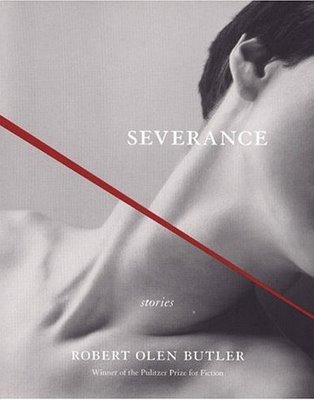
Sixty-two entries, each in the voice of a beheaded historical, mythical, animal or modern figure, make up the collection. Each is exactly 240 words, Butler's estimate of the number of words that could be spoken by a decapitated head before oxygen runs out. Among the post-mortem monologues Butler imagines are John the Baptist, Medusa, Cicero, a chicken, Nicole Brown Simpson, Maximilien Robespierre, Valeria Messalina and himself, "decapitated on the job" in 2008.
Gripping cover too.
(Via Book Covers from the NYT book review)
While being an improvement over BookCrossing, I don't think it solves the main problem with trading systems like these: that people will game the system by flooding it with lousy books. In BookMooch's case, since you get the same number of points when you post "MS-DOS for Dummies" as you do for Julio Cortazar's "Hopscotch", I think people will eventually start dumping books that they know are unwanted in order to earn points, so that they can ask people for books that are wanted.
Well, it's still early. Here's my list of books to give away
Saturday, September 02, 2006
Thursday, August 31, 2006
Tuesday, August 29, 2006
Monday, August 28, 2006
Saint Jack
The film's full of one-liners like that, and Ben Gazzara throws each one like a tight punch.
For his presentation yesterday, Ben Slater, author of the book on the making of this 1979 (officially, but the film was completed in 1978), spoofed Ho Tzu Nyen's Utama: Every Name in History is I, last seen at the recently concluded Singapore Theatre Festival. Admittedly, Ho's wry Powerpoint "lecture-performance" is ripe for parodies (which reinforces its point, but that's for another post). However, I couldn't help but wonder if there was some synchronicity between Ho's exploration of how people shape the kinds of history they want, and Saint Jack: a movie made by Westerners about a Singapore that they found alluring and exotic in its own way. There's even a scene where Jack is retelling the Sang Nila Utama myth to William in his own rascally way. (And if you'd bought the book, you'd have known that both men were drunk during that scene too.)
(More about the book Kinda Hot: http://kindahot.blogspot.com/)
Well, that's the 1970s for you. Even so, like Ben I'm hoping for a commercial release of this movie sometime soon - the ban was lifted in March after all. Not because the film's very good or particularly illuminating, but because it's a genuinely interesting character-driven drama shot in Singapore. Besides, if you were born after the 1970s, aren't you curious to see what Bugis Street and Boat Quay and Chinatown looked like then?
Friday, August 25, 2006

"For All Seasons" is an impressive Flash animation - where text turns pages into landscapes you can manipulate. "Autumn" is my favorite - now find yours.
Tuesday, August 22, 2006
Monday, August 21, 2006
Sunday, August 20, 2006
And my trackpad's still not working, so I may have to go to the service centre anyway. I personally don't like using trackpads, but it was convenient.
Tuesday, August 15, 2006
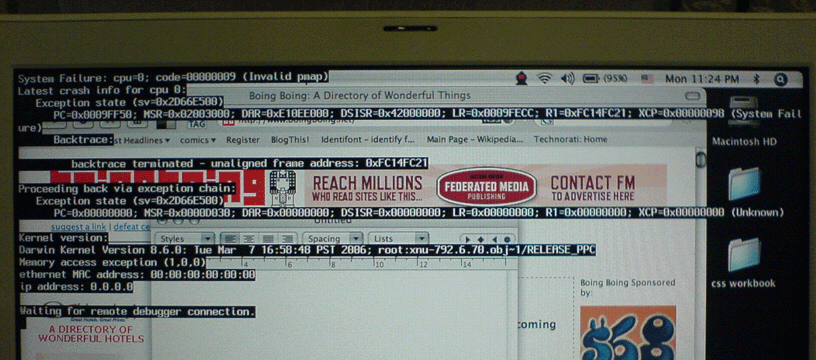
Yep, my iBook crashed. It's been giving me problems for a while now: trackpad won't work; resets itself randomly; won't wake from sleep mode properly. I'd sit down and reinstall the OS... if I had a day or two to blow sitting in front of that white slab trying to figure out what the hell I'm doing.
To the service centre then. The iBook's actually lasted a shorter period than and given me more problems than a Windows PC. Why me?
Monday, August 14, 2006

Saturday, August 05, 2006
Speaking of travel, the LA Public Library has scanned its collection of vintage travel posters: Far and Wide.
Monday, July 24, 2006
Wednesday, July 19, 2006
Sunday, July 16, 2006
San Serriffe | Typographica
Wednesday, July 12, 2006
Tuesday, July 04, 2006
Monday, July 03, 2006
Coudal Partners: Booking Bands
- but what caught my attention was that they installed blackboards in their washroom. Neat.
Sunday, July 02, 2006

Let's take a minute or two to remember the grand old dame of Singapore cinemas – the Capitol.
(The Capitol on Cinema Treasures)
There’s a feature on the Capitol cinema in today's Sunday Times (No links because The Straits Times has in place an anachronistic policy of locking every article behind a subscription. Perfect way to make yourself irrelevant online.) For those of you outside Singapore, or just too young to remember, the Capitol was a major cinema with much nostalgic value in the memories of many (slightly older) Singaporeans. It's still a key landmark here, right in the city centre.
(Photos, circa 2001)
Unfortunately, nostalgia alone doesn't count for much here. The article talks about the derelict state the Capitol has fallen into since its closure in 1998, after the invasion of multiplexes. Everything's rotting away or falling into disrepair due to neglect. This is painful to think about when you recall its history as a premier cinema here, with lavish (for its time) interiors. I was particularly impressed by the large representation of the zodiac on the auditorium ceiling, less so by the stylised wall-mounted sculptures of horses and riders on either side of the screen – all relics from an era when going to the movies was an experience.
No-one seems to want to take over the Capitol. Old buildings are very expensive to maintain, and when you add that to the exorbitant restoration and refurbishment costs, it becomes hard to justify why anyone would want to take over the building.
Should the Government do it? It’s easy to point at the authorities, but that doesn’t answer the real question: "What will we do with the Capitol?" It may not be completely right for the authorities to do nothing, but what are the alternatives?
The amazing Regret Index: I guess there is a lesson here for us all.
vote to find something new to regret
a world of regret awaits you
be a cautionary example for others
a horrible warning of life gone awry
Thursday, June 29, 2006
The point here is that in life one is entitled to a side dish of either coleslaw or potato salad, and the choice must be made in terror, with the knowledge that not only is our time on earth limited but most kitchens close at ten.The New Yorker: Thus Ate Zarathustra
Thursday, June 22, 2006
Hooray for YouTube!
Monday, June 05, 2006

I already have a copy of Murakami Haruki's Dance Dance Dance, but I couldn't resist picking up a used copy of the Vintage International paperback, just for the startling cover art by John Gall. That was my sole purchase at Zouk's monthly flea market - Flea n' Easy.
One of my pet peeves is the abuse of the "@" symbol in names, and I thought the curators at the Singapore Art Museum latest exhibition might have been able to avoid this but no -- their latest exhibition is called Fiction@Love . What's that symbol doing there anyway? The phrase makes no sense whatsover.
In my opinion, the curators tried to be a bit too ambitious - the whole collection lacks a compelling focus, but it's worth a look (only $3 and there's the rest of the museum!). Stuff I especially liked were Amano Yoshitaka's black-and-white, close-up, Lichtenstein-ish portrait of a Gatchaman character, very different from his opulent, ethereal, and Yamaguchi Ai's "Hyaku no hana, yuki wa furitsutsu" installed in a small room near the second floor exit.
While you're there, go look in Gallery 2.7 (or was it 2.8?) for the work of video artist Paul Pfeiffer. I like John 3:16 and Fragment of a Crucifixion (after Francis Bacon).
Saturday, June 03, 2006
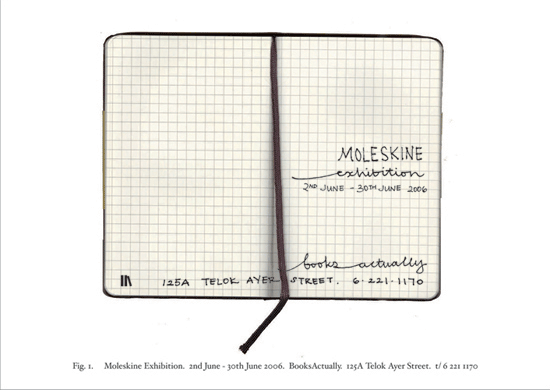
Constrained by the small floor area, Karen and Kenny have tried to display the Moleskine notebooks for their little exhibition at BooksActually as best they can. The whole experience is a bit voyeuristic -- you are looking through someone's personal notebooks after all -- and the disposable rubber gloves provided add a fetishistic tinge.
Kenny says more books will be coming in week of 5th June. Go over and say hi.
Friday, June 02, 2006
Tuesday, May 30, 2006
If Saturday night was the Irish wake for Cafe Cosmo, this was the church funeral. Hope things work out for the owners.
Thursday, May 25, 2006
Tuesday, May 23, 2006

Sunday, May 21, 2006
And in other news, The Futureheads are releasing a new album on 13th June: News and Tributes.
Saturday, May 13, 2006

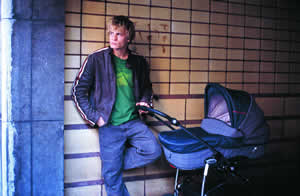 I can't say whether or not L'Enfant deserved last year's Palme D'Or, but after watching it, the word that comes to mind is "lean". The Dardenne brothers managed to grasp the essentials of the story and express them without frills. No music, fine attention to sound, lighting and movement, no fancy camerawork -- mostly close-ups and tracking shots from the back, tight dialogue and editing. Every film student and budding director should be made to watch this, as an example of effective filmmaking -- of the power of getting film basics right.
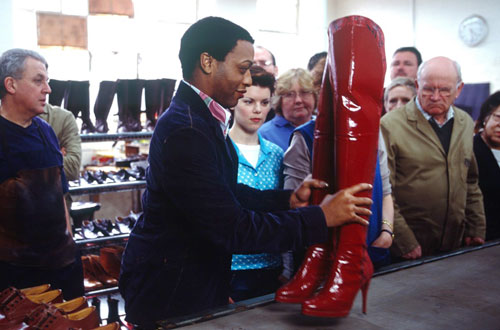 On the other hand, Kinky Boots was utterly formulaic. Chiwetel Ejiofor's performance is the only saving grace here - the drag queen Lola gets the best lines, but Ejiofor makes them sparkle with sassiness, like his "two-and-a-half-feet of tubular sex" rant. Unfortunately, everyone else is stuck in their cardboard roles.
On a side note, a pair of Jimmy Choo shoes may or may not have been hurt in the making of this film.
Wednesday, May 10, 2006
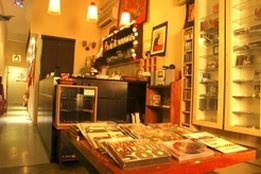 Rumour has it that Cafe Cosmo will close at the end of this month. If it's true, you only have about 2 1/2 weeks more to check out this cosy, laid-back, indie music joint. Take friends, a camera, cash for drinks or an obscure CD, maybe some Kleenex. And if the rumours are false - well, isn't it time you discovered the place anyway?
(And while you're in the area, drop into BooksActually.)
For the first time, the discharge of a nematocyst has been recorded, using a camera that takes 1.4 million frames a second. The article below links to a video clip!
New Scientist Breaking News - Explosive sting of jellyfish captured on film
Am still halfway through Orlando. I had to return the version I originally borrowed from the library, but there're so many copies floating around that I couldn't be bothered to renew the loan. Just ran into a library and grabbed another.
 I had begun with the latest printing - Orlando is part of Penguin's freshly released Red Classics series. Another reinvention of older books! This series is stripped of any notes or commentaries though. Cost issues?
(Incidentally, in my opinion the quality of the cover art isn't as good throughout. The Jane Austen ones do stand out nicely with the largely uncoloured hand-drawn illustrations.)
 The second time I borrowed Orlando, I got the silver-covered Modern Classics version. The cover is an asymmetrically cropped screen capture from the 1992 film, with striking composition. And beautiful Tilda Swinton casting a self-assured, even smug look at the reader. You can't see it in the image, but there's a hint of a smirk tucked away in the corner of her lips.
btw, if you're interested: American paperback covers of Virginia Woolf's Orlando.)
Tuesday, May 09, 2006
If you didn't know already, Nagi Noda also directed "Mariko Takahashi's Fitness Video" -- the strange one with the poodle-shaped woman and her exercising poodle friends.
Monday, May 08, 2006
 I wonder why Secretary got the manga treatment for its Japanese release? Not that I mind Eguchi Hisashi's (江口寿史) brightly-coloured, photo-realistic illustrations.
 See the actual DVD case here (thanks to Filmbrain).
Sunday, May 07, 2006

That demon cat, as expected, dominates the majority of cover art for The Master and Margarita. Most covers use an illustration:
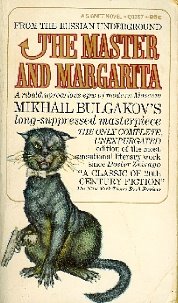
The cover art for the version I just bought is unique in that it's a photograph of a cat in profile against a rich russet sky (looks like red in the image, but trust me on the russet). Subdued, but still interesting.

Much classier than the cartoonish art for the newer Vintage release:

But this Penguin one is my favorite so far:
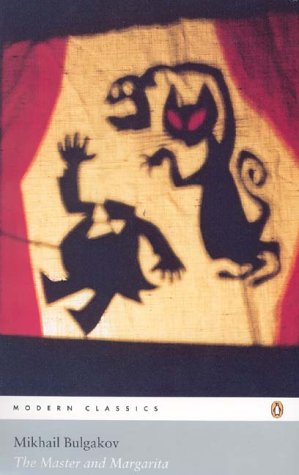
We dropped into BooksActually on the way to Cafe Cosmo, and I found a copy of The Master and Margarita.
After drinks, we went for satay, while SMSing those at home for election results.
So, how did your Election Day go?
Thursday, May 04, 2006
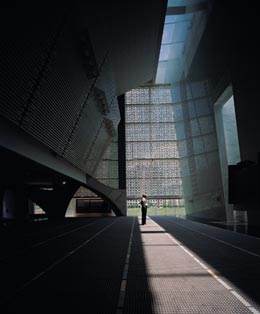 A Singaporean mosque featured in an American design magazine? I.D. Magazine has an article on the Assyafaah Mosque. Ignore the crude attempt at analysing SE Asia geopolitics -- the commentary on architectural and design elements is what we are here for:
Singapore's unofficial official design style is modern, born of the clean, earnest, dutiful modernism from the heyday of Western corporate headquarters (1960s-1980s). Modern design has offered Singapore a way to brand an identity for the sake of locals and foreigners alike. In the nation's early years, the fast rise of American-style office buildings gave Singapore a prosperous and familiar look that appealed to Western investors wary of Asian inscrutability. Now that Singapore really is prosperous, with a 2004 growth rate of 8.4 percent and an Asian standard of living second only to Japan's, modernism provides a nondenominational building style - a vocabulary unattached to any Asian region, race, or religion. One could argue that modernism maintains prosperity by keeping the ethno-religious peace. It may not always be pretty, but it never takes sides by looking too Chinese or Malay, too Buddhist or Muslim.
[...]
Its local architect, Tan Kok Hiang, a principal of Forum Architects, has explained that contemporary design is more strategic than traditional Islamic architecture, at least in this place, at this moment. First of all, the Middle Eastern mosque archetype is not only foreign to Singapore, but it is also imposing, even off-putting: The Malays are not Arab. On the other hand, a more modest mosque in the Malay vernacular might repel ethnically Chinese converts to Islam.
Interested? Architecture Week has a more detailed feature on the Assyafaah mosque. Next step is to visit it.
Tuesday, May 02, 2006
In all, Mr. Pramoedya, a small, slender man who was frail much of his life, wrote more than 30 works: novels, short stories, long articles, short nonfiction pieces and a memoir of his hellish years as a political prisoner on the arid Indonesian island of Buru.
What caught my attention was this:
He was held without charges for 14 years on Buru, then kept under house arrest in Jakarta until 1992. But Mr. Pramoedya, fearful that he would not be allowed back into the country if he traveled abroad, did not dare leave Indonesia until Suharto was swept from power in 1998.
Despite all Soeharto's government did, they couldn't smother Pramoedya's love for his home.

"Nell," the Constable continued, indicating through his tone of voice that the lesson was concluding, "the difference between ignorant and educated people is that the latter know more facts. But that has nothing to do with whether they are stupid or intelligent. The difference between stupid and intelligent people -- and this is true whether or not they are well-educated -- is that intelligent people can handle subtlety. They are not baffled by ambiguous or even contradictory situations -- in fact, they expect them and are apt to become suspicious when things seem overly straightforward."----- Neal Stephenson, The Diamond Age
The most unique posts are the ones that are sad just because. Like the tree that kept getting hit by junk and vehicles till it died.
Monday, May 01, 2006
But then, it's not so ironic when my office library actually has a copy. A US hardcover version, no less. Certainly in much better condition than the battered, well-thumbed UK trade paperback I eventually took out of the public library.
------------------------------------------
You scored as Serenity (Firefly).
You like to live your own way and don?t enjoy when anyone but a friend tries to tell you should do different. Now if only the Reavers would quit trying to skin you.
 |
Your Ultimate Sci-Fi Profile II: which sci-fi crew would you best fit in? (pics)
created with QuizFarm.com
Friday, April 28, 2006
Wednesday, April 26, 2006
 Can any work seriously claim to have assembled the best 999 examples of design ever? Phaidon Design Classics have tried, with the earliest entry dating from 1663. Black Glaser Stencil on bright yellow reminds me of construction equipment. Industrial design, is it?
Hanalei Bay -- part 1
Hanalei Bay -- part 2
Tuesday, April 25, 2006
Let's begin with the much-vaunted dialogue. I understand that the dialogue was workshopped, but the end result is still flaccid and disappointing -- no different from just getting the actors to sit around and just talk. No indication whatsoever about the characters' motivations or personalities. The dialogue is uninspired and meandering.
The trick with dialogue-heavy narratives is to create dialogue that sounds plausible, yet also serves a dramatic purpose. At a basic level, dialogue advances the plot. Better writers are able to make dialogue reveal bits of character so that the audience will be able to react in some way. Conversely, pointless chatter in a movie may be "realistic", but it's completely uncinematic. If I want realistic dialogue, I'd go sit in a Coffee Bean for a few hours.
The point is not to be realistic, but to give the impression of realism. Sadly, this film is a gross example of how the former can be hopelessly confused with the latter.
The camera movements were the worst. "Erratic" does not begin to describe the camera movements, with shots that were clearly off for no dramatic reason whatsoever. "Hummingbird on LSD-laced speed" is a better description, and even then hummingbirds stay in place sometimes.
But hey, it's director Kan Lume's first film after all. Hope the next one's better.
Monday, April 24, 2006
Saturday, April 22, 2006
Friday, March 17, 2006
We sit and watch umbrellas fly
I'm trying to keep my newspaper dry
I hear myself say
My boat's leaving now
So we shake hands and cry
Now I must wave goodbye
Wave goodbye, wave goodbye
Wave goodbye, wave goodbye
You know I don't want to cry again
I'll never see your face again
I don't want to cry again
We leave to their goodbyes
I've come to depend on the look in their eyes
My blood's sweet for pain
The wind and the rain brings back words of a song
And they sing wave goodbye
Wave goodbye, wave goodbye
Wave goodbye, wave goodbye
You know I don't want to cry again
I'll never see your face again
I don't want to cry again
So I read to myself
A chance of a lifetime to see new horizons
On the front page a black and white picture of
Manhattan Skyline
Thursday, March 09, 2006
Monday, March 06, 2006
It's a thought-provoking, expressive reflection on the ossification of ideals. If you're Singaporean, you should read what they have to say: Paved With Good Intentions
Sunday, March 05, 2006
Thursday, March 02, 2006
Tuesday, February 28, 2006
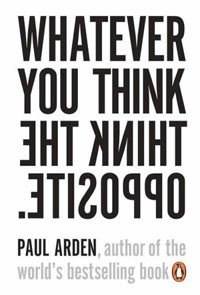 Paul Arden's switched publishers, from Phaidon to Penguin for his new book: Whatever You Think, Think The Opposite.
 Known for art and photography books, Phaidon's book designs tend to be better and more slick. That was part of the appeal of his first book It's Not How Good You Are, It's How Good You Want To Be.
That book is great for raising downtrodden spirits, and I picked up the second based on the strength of the first. Yes, even though Penguin chose to publish the covers in unfinished heavy paper, which looks dull and stains easily. The paper used in the book also smells awful, and the book's a lot more expensive than his first one.
Once you get past the physical flaws, Whatever You Think has an even stronger rah-rah effect than its predecessor, part of which is probably because it's a more internally consistent work. I thought one of the (very) minor flaws of It's Not How Good You Are was that the little snippets that comprise the book were a bit disjointed, ranging from abstract inspirational bites to tidbits of practical advertising advice. The stories in Whatever You Think have a more evenly irreverent, defiant tone.
Sunday, February 26, 2006
Monday, February 20, 2006
Monday, February 13, 2006
 The coasters are simple: the stamp design enlarged and printed on a plain white tile, with a sheet of cork stuck on the bottom. At $5 a piece, they're affordable.
I've always thought the designs were very appealing. Clean, crisp line drawings with minimal colouring and Helvetica typeface. The photo taken with my dinky Palm doesn't do it justice at all.
The Banyan Tree should consider selling a set of coasters containing each stamp from the Ship series.
Thursday, January 26, 2006
Monday, January 23, 2006
Monday, January 16, 2006
ChannelNewsAsia.com - Government to impose stiffer penalties for NS defaulters
Melvyn Tan was in his 50s, and he risked the wrath of the authorities to come back and see his sick parents. I wonder how many of those who complained can boast such filial piety?
Speaking of hypocrisy, isn't hiding the truth a sin in Christianity?
ChannelNewsAsia.com - Non-profit group gets grant to promote 'healthy gender identity'
Tuesday, January 10, 2006
Guardian Unlimited Film | Features | Hollywood's new politics
Founding eBay made Jeff Skoll a billionaire. Now he is doing something very different - producing political movies that recall the rabble-rousing days of Warren Beatty and Robert Redford, and turning American filmgoers into grassroots activists
Sunday, January 08, 2006
Though victims largely point the finger at foreign workers, police said the eight arrested were a mix of locals and foreigners.
and:
Marketing manager Teo Shuyin, 21, who was on Orchard Road last Saturday, recalls walking with her arms folded across her chest. She said the culprits were foreign workers.
'They set on us the moment we stepped out of the car. I was hiding behind people and using my arms to cover my chest. And even when they weren't spraying, you could feel them staring at you,' she said.
Of course molestation is wrong, but how can Singaporeans be so sure that the culprits aren't locals?
Saturday, January 07, 2006
Friday, December 30, 2005
 William Taubman spent 20 years researching Khrushchev: The Man and His Era. It seems a marvel to me how all that effort, sustained over so many years, now weighs so lightly on my hands!
 Taubman is clearly an unsympathetic biographer. He gives his subject credit where it's due, but doesn't hesitate to be critical where necessary (which is most of the time). It's clear that Khrushchev was no moral exemplar, no great strategist or thinker -- not even a good father. As a national leader, he was a blunderer. The more he tried to show how capable or strong he was, the less people thought of him.
Sunday, December 18, 2005
To cap it all off, Kuper thanks Kafka for being "kind enough to put pen to paper in the first place", as if Kafka's tortured work came from some kind of charity dinner altruism. Oh, we'd like to thank Mr. So-and-So who was kind enough to donate a halibut. Infuriating.
Tuesday, December 06, 2005
"I almost think that if I'd gotten the Nobel Prize when The Recognitions was published I wouldn't have been terribly surprised," Gaddis told The Paris Review in 1986, adding that the book's reception had been "sobering" and "humbling." Maybe if the novel had met with greater acclaim Gaddis would have relaxed a little; maybe Wyatt's "what is it they want" tirade, like his other puritanisms, would have been revealed as a skinny-young-man attitude to be outgrown. I doubt it, though. The book is about the everyday world's indifference to the superior reality of art. Its last line ("with high regard, though seldom played") unmistakably prefigure its own reception. Nurturing the hope that your marginal novel will be celebrated by the mainstream - the Cassandra-like wish that people will thank you for telling them unwelcome truths - is a ritual way of ensuring disappointment, of reaffirming your own world-denying status, of mortifying the flesh, of remaining, at heart, an angry young man. In the four decades following the publication of The Recognitions, Gaddis's work grew angrier and angrier. It's a signature paradox of literary postmodernism: the writer whose least angry work was written first.
--- Jonathan Franzen, "Mr Difficult" in How To Be Alone

Wednesday, November 30, 2005
--- Jonathan Franzen, "Why Bother?" in How To Be Alone
Tuesday, November 29, 2005
A nation which ignores and does not encourage its theatre is, if not culturally dead, culturally pitiable; just as the theatre which ignores the drama of its people, and fails to register their trials as well as their triumphs, their tears and their laughter, has little right to call itself a national theatre, but merely as amusement hall, a place for those who attend merely to "kill time".
-- Goh Poh Seng
Tuesday, November 15, 2005
Monday, November 14, 2005

Saturday, November 05, 2005
Lvov: Why have you brought me to this house of reptiles? This is not a place where honest people should be seen.
Anna: Would you mind, Doctor, can I give you a social tip? It's bad manners to take a lady out and keep on about how honest you are. Perhaps it's true but nobody wants to know. I promise you, it's good advice. Don't draw attention to your virtues. Let women discover them for themselves. When Nikolai was your age, then he did nothing but sing songs and tell stories. And there wasn't one woman alive who couldn't sense what a fine man he was.
Lvov: Please. Don't compare me with Nikolai. I know everything about him.
Anna: No. You don't. You're a good man but you know nothing. Let's go into the garden. Nikolai never used to rail against the menagerie. You never heard Nikolai call people reptiles. Or boast about his own superiority. He left people alone to live their own lives. If he spoke at all it was to blame himself for his own impatience, or to express his pity for some poor soul. That's how he was. Forgiving. Not like you...--- Anton Chekov, Ivanov, Act 2 Sc 10. Adapted by David Hare.
Friday, November 04, 2005
In the late 1980s, however, ABC was purchased by Capital Cities, a media conglomerate, which in an attempt to signal the change of ownership demanded that the Rand logo be altered or scrapped. Once again, various designers were called upon to better the original (Rand was not invited to participate), and new versions included such tropes as stylized stars and eagles (to emphasize the American in ABC). But none could equal the simplicity of the existing mark. After the failed attempt at change was over, a bemused Rand commented: 'It was a great mistake, not because it was the greatest logo in the world, but even a bad logo shouldn't be changed except for very good reasons. Because a logo doesn't represent a company. The company represents the logo. If you're a lousy company, your logo is useless, no matter how well designed. If your logo is good, and you're a good company, you have an ideal situation. If the company is bad, it's a bad logo. So the idea of changing a logo without recognizing the importance of the change is stupid.'
--- Steven Heller, Paul Rand

Tuesday, November 01, 2005
If the search for justice can be seen as Tempo's "paraideology", in practical terms this meant that for Tempo journalists, being "balanced" in a system that was inherently unbalanced was not enough. "There was one incident I remember from early on," Goenawan said, "it was when Tempo was in Senen. The law editor reported a story, something very evenhanded. But then the side of the weak was overshadowed, simply because he was weak. And I discovered that being even was not enough. And we had a debate about it, whether we should be so impartial, so even, when the victims are very weak. And we changed the story. We killed that story. And so I think from then on we decided that being even was not enough. Because before the philosophy had been to cover both sides. And we discovered it was not so easy."
--- Janet Steele, Wars Within: The Story of Tempo,
an Independent Magazine in Soeharto?s Indonesia

Wednesday, October 26, 2005
WOMAN: I was created of Nu and Wa, the sister and brother whose union marks the beginnings of the human race.
NARRATOR: (Sage Chinese accent) She is sometimes described as having a human head but the body of a snake or fish. Bi-zarre.
WOMAN: Having the head of one species and the body of another may sound bi-zarre to you, but if you think about it with the Chinese part of your brain, it will be easier for you to understand. You see, it is very difficult to imagine a goddess with bound feet. Can you see me as a two-year-old goddess held down on a bed with cotton in my mouth to gag my screams while my foot is bent inwards into itself until the tender arch snaps and breaks? And can you see me, lovely ephemeral creature that I am, unwinding the stinking bandages from my feet once a week, to squeeze out the pus and cut away the dying flesh? But for many years, you couldn't be a lady without bound feet, and can you imagine a goddess that isn't also a lady? So, the solution... if you have the body of a snake or fish you can still have a beautiful face and be a lady without having bound feet.--- Ovidia Yu, The Woman in a Tree on a Hill
Tuesday, October 25, 2005
As a management consultant, I've visited my share of offices that send out confused signals. Not too long ago the window office, walnut desk and leather chair were nearly as important as the salary in reflecting executive status. In this carrot-and-stick model, only the champions earned leather and wood. But I know firsthand that lots of folks rebel against that work model. I still remember the day I interviewed at the consulting division of one of the big accounting firms. Great people. Reputable firm. Reasonable salary. It all looked pretty good until I asked to see what my office space would be like as a new associate.
First, my simple question about space flushed out the truth about lifestyle. Suddenly, I heard that you travel so much you don't really need a desk, which was a different story than I had heard earlier. Second, I got a clear signal about how they valued new associates. Not only did I not get a desk, I didn't get a filing cabinet or even a drawer. Where would I store my files and things? I'd share a gray sheet-metal utility shelf with another associate, my portion marked only by my name scribbled on a piece of masking tape. Maybe it wasn't quite rational that I turned down the job offer partly because of a gray utility shelf, but the space had communicated a lot about the firm's culture, and I wonder how much talent was fended off over the years because the "body language" of the firm said, "New associates don?t matter."--- Tom Kelley (with Jonathan Littman), The Art of Innovation


Monday, October 24, 2005
"I assume you've read some of Kafka's stories?"
I nod. "The Castle, and The Trial, 'Metamorphosis'. Plus that weird story about an execution device."
"'In the Penal Colony'," Oshima says. "I love that story. Only Kafka could have written it."
"That's my favorite of his short stories."
"Really?"
I nod.
"Why's that?"
It takes me a while to gather my thoughts. "I think what Kafka does is give a purely mechanical explanation of that complex machine in the story, as sort of a substitute for explaining the situation we're in. What I mean is..." I have to give it some more thought. "What I mean is, that's his own device for explaining the kind of lives we lead. Not by talking about our situation, but by talking about the details of the machine."
--- Murakami Haruki, Kafka on the Shore
(trans. Philip Gabriel)
Friday, October 21, 2005
LESLEY: Are we so difficult for you?
GRACE: Yes.
LESLEY: Do we seem so wrong? (Pause from Grace. Lesley laughs gently) In London, whoever came home first would get dinner. Whoever was later would do the dishes and take out the garbage. Ellen would work late just to avoid dinner duty. On Saturday mornings we would clean house, do the laundry, lug grocery bags up five flights of stairs. On Sundays, we would fight over the weekend paper, have friends over for dinner, run out of paper napkins. Earthshaking, wasn't it? But you know how it is already.
GRACE: Yes. And you know that's exactly why it's so difficult.
(Music.)--- Eleanor Wong, Wills and Secession
Thursday, October 20, 2005
From space, astronauts can see people making love as a tiny speck of light. Not light, exactly, but a glow that could be mistaken for light - a coital radiance that takes generations to pour like honey through the darkness to the astronaut's eyes.
In about one and a half centuries - after the lovers who made the glow will have long since been laid permanently on their backs - metropolises will be seen from space. They will glow all year. Smaller cities will also be seen, but with great difficulty. Shtetls will be virtually impossible to spot. Individual couples, invisible.
The glow is born from the sum of thousands of loves: newlyweds and teenagers who spark like lighters out of butane, pairs of men who burn fast and bright, pairs of women who illuminate for hours with soft multiple glows, orgies like rock and flint toys sold at festivals, couples trying unsuccessfully to have children who burn their frustrated image on the continent like the bloom a bright light leaves on the eye after you turn away from it.
Some nights, some places are a little brighter. It's difficult to stare at New York City on Valentine's Day, or Dublin on St. Patrick's. The old walled city of Jerusalem lights up like a candle on each of Chanukah's eight nights. Trachimday is the only time all year when the tiny village of Trachimbrod can be seen from space, when enough copulative voltage is generated to sex the Polish-Ukrainian skies electric. We're here, the glow of 1804 will say in one and a half centuries. We're here, and we're alive.--- Jonathan Safran Foer, Everything is Illuminated
Friday, October 07, 2005
Tuesday, August 30, 2005
The modern industrial society, or that part of it which is composed of the large corporations, is in all essentials a planned economy. By that I mean that production decisions are taken not in response to consumer demand as expressed in the market, rather, they are taken by producers. These decisions are reflected in the prices that are set in the market, and in the further steps taken to ensure that people will buy what is produced and sold at those prices. The ultimate influence is authority.
--- J.K. Galbraith
Monday, August 08, 2005
Sailors fighting in the dance hall
Oh man! Look at those cavemen go
It's the freakiest show
Take a look at the lawman
Beating up the wrong guy
Oh man! Wonder if he'll ever know
He's in the best selling show
Is there life on Mars?
Sunday, July 24, 2005
Monday, July 04, 2005
Friday, July 01, 2005
Doesn't anyone find it culturally absurd that we're commemorating an explorer who has almost no link to Singapore whatsoever other than that he passed by and might have used us as a resupply point?Xinhua carried an article on this -- bet the China Chinese are amused.