Wednesday, May 10, 2006

I finally found a copy of Iain Pears' The Dream of Scipio, used. A cheap paperback with thin pages destined for the racks of airport shops, next to the magazines and mints. Likewise, the cover's uninspired.

Am still halfway through Orlando. I had to return the version I originally borrowed from the library, but there're so many copies floating around that I couldn't be bothered to renew the loan. Just ran into a library and grabbed another.
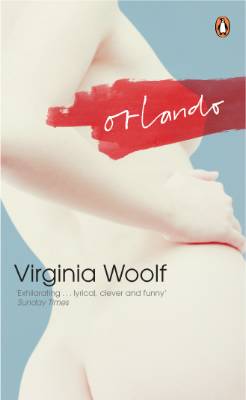
I had begun with the latest printing - Orlando is part of Penguin's freshly released Red Classics series. Another reinvention of older books! This series is stripped of any notes or commentaries though. Cost issues?

(Incidentally, in my opinion the quality of the cover art isn't as good throughout. The Jane Austen ones do stand out nicely with the largely uncoloured hand-drawn illustrations.)


The second time I borrowed Orlando, I got the silver-covered Modern Classics version. The cover is an asymmetrically cropped screen capture from the 1992 film, with striking composition. And beautiful Tilda Swinton casting a self-assured, even smug look at the reader. You can't see it in the image, but there's a hint of a smirk tucked away in the corner of her lips.


btw, if you're interested: American paperback covers of Virginia Woolf's Orlando.)

Tuesday, May 09, 2006

Resfest favorite Nagi Noda's music video (for some idoru called Yuki). Tolerate the first minute: the stop-motion photographic fun starts after about 1:05.


If you didn't know already, Nagi Noda also directed "Mariko Takahashi's Fitness Video" -- the strange one with the poodle-shaped woman and her exercising poodle friends.

Monday, May 08, 2006

I wonder why Secretary got the manga treatment for its Japanese release? Not that I mind Eguchi Hisashi's (江口寿史) brightly-coloured, photo-realistic illustrations.

See the actual DVD case here (thanks to Filmbrain).

Sunday, May 07, 2006

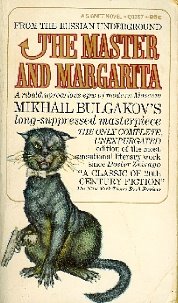
My first encounter with The Master and Margarita came when I first saw this cover (can't recall where though).

That demon cat, as expected, dominates the majority of cover art for The Master and Margarita. Most covers use an illustration:

The cover art for the version I just bought is unique in that it's a photograph of a cat in profile against a rich russet sky (looks like red in the image, but trust me on the russet). Subdued, but still interesting.

Much classier than the cartoonish art for the newer Vintage release:

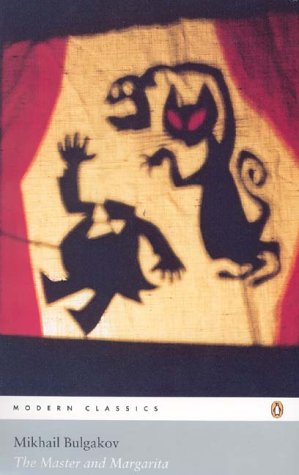
But this Penguin one is my favorite so far:
It was almost a decade before I got to watch Peter Jackson's acclaimed 1994 movie Heavenly Creatures. Jackson's treatment of Juliet and Pauline's fantasy world is fascinating and creepy at the same time, becoming even more so as their grip on reality slips.

We dropped into BooksActually on the way to Cafe Cosmo, and I found a copy of The Master and Margarita.

After drinks, we went for satay, while SMSing those at home for election results.

So, how did your Election Day go?

Thursday, May 04, 2006

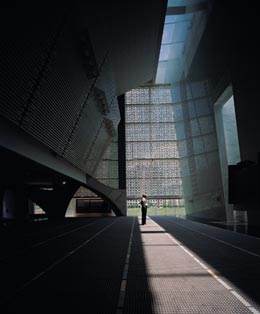
A Singaporean mosque featured in an American design magazine? I.D. Magazine has an article on the Assyafaah Mosque. Ignore the crude attempt at analysing SE Asia geopolitics -- the commentary on architectural and design elements is what we are here for:
Singapore's unofficial official design style is modern, born of the clean, earnest, dutiful modernism from the heyday of Western corporate headquarters (1960s-1980s). Modern design has offered Singapore a way to brand an identity for the sake of locals and foreigners alike. In the nation's early years, the fast rise of American-style office buildings gave Singapore a prosperous and familiar look that appealed to Western investors wary of Asian inscrutability. Now that Singapore really is prosperous, with a 2004 growth rate of 8.4 percent and an Asian standard of living second only to Japan's, modernism provides a nondenominational building style - a vocabulary unattached to any Asian region, race, or religion. One could argue that modernism maintains prosperity by keeping the ethno-religious peace. It may not always be pretty, but it never takes sides by looking too Chinese or Malay, too Buddhist or Muslim.
[...]
Its local architect, Tan Kok Hiang, a principal of Forum Architects, has explained that contemporary design is more strategic than traditional Islamic architecture, at least in this place, at this moment. First of all, the Middle Eastern mosque archetype is not only foreign to Singapore, but it is also imposing, even off-putting: The Malays are not Arab. On the other hand, a more modest mosque in the Malay vernacular might repel ethnically Chinese converts to Islam.

Interested? Architecture Week has a more detailed feature on the Assyafaah mosque. Next step is to visit it.

Tuesday, May 02, 2006

The New York Times reports that Pramoedya Ananta Toer, Indonesian novelist, has passed away. Another of the generation that fought for independence, gone.

In all, Mr. Pramoedya, a small, slender man who was frail much of his life, wrote more than 30 works: novels, short stories, long articles, short nonfiction pieces and a memoir of his hellish years as a political prisoner on the arid Indonesian island of Buru.

What caught my attention was this:
He was held without charges for 14 years on Buru, then kept under house arrest in Jakarta until 1992. But Mr. Pramoedya, fearful that he would not be allowed back into the country if he traveled abroad, did not dare leave Indonesia until Suharto was swept from power in 1998.

Despite all Soeharto's government did, they couldn't smother Pramoedya's love for his home.
"Nell," the Constable continued, indicating through his tone of voice that the lesson was concluding, "the difference between ignorant and educated people is that the latter know more facts. But that has nothing to do with whether they are stupid or intelligent. The difference between stupid and intelligent people -- and this is true whether or not they are well-educated -- is that intelligent people can handle subtlety. They are not baffled by ambiguous or even contradictory situations -- in fact, they expect them and are apt to become suspicious when things seem overly straightforward."

----- Neal Stephenson, The Diamond Age
The Saddest Thing I Own seems a bit like a Postsecret clone. As expected, most of the objects are there because they remind their owners about relationships and memories. I can sympathise with those, but I'd like to say that everyone has experiences and objects like that.

The most unique posts are the ones that are sad just because. Like the tree that kept getting hit by junk and vehicles till it died.

Monday, May 01, 2006

Jhumpa Lahiri has a short story in the New Yorker: Once in a Lifetime.
My employers, in their beneficence, granted everyone a boon of book vouchers. For a moment, I relished the potential irony of using them to buy Po Bronson's What Should I Do With My Life.

But then, it's not so ironic when my office library actually has a copy. A US hardcover version, no less. Certainly in much better condition than the battered, well-thumbed UK trade paperback I eventually took out of the public library.
Lots of people have told me how good Serenity is. Add one more reason to see the movie:

------------------------------------------
You scored as Serenity (Firefly).

You like to live your own way and don?t enjoy when anyone but a friend tries to tell you should do different. Now if only the Reavers would quit trying to skin you.


Your Ultimate Sci-Fi Profile II: which sci-fi crew would you best fit in? (pics)
created with QuizFarm.com
I'm always discovering new stuff too late. Nerve.com's the Weekly Pic will no longer be updated, but you can (re)discover all the video clips. Some great stuff in there, like Pez's Roof Sex and the Flash-animated music video for TISM's Everyone Else Has Had More Sex Than Me, just to name a few.

Friday, April 28, 2006

Wes Anderson does an ad for American Express. The classical music, deadpan, off-kilter humour and 70s costuming? All here.

Wednesday, April 26, 2006

Can any work seriously claim to have assembled the best 999 examples of design ever? Phaidon Design Classics have tried, with the earliest entry dating from 1663. Black Glaser Stencil on bright yellow reminds me of construction equipment. Industrial design, is it?
The Guardian carried a short story from Murakami Haruki's Blind Willow, Sleeping Woman. In two parts:

Hanalei Bay -- part 1
Hanalei Bay -- part 2

Tuesday, April 25, 2006

The Art of Flirting is absolutely, utterly banal. Completely insipid.

Let's begin with the much-vaunted dialogue. I understand that the dialogue was workshopped, but the end result is still flaccid and disappointing -- no different from just getting the actors to sit around and just talk. No indication whatsoever about the characters' motivations or personalities. The dialogue is uninspired and meandering.

The trick with dialogue-heavy narratives is to create dialogue that sounds plausible, yet also serves a dramatic purpose. At a basic level, dialogue advances the plot. Better writers are able to make dialogue reveal bits of character so that the audience will be able to react in some way. Conversely, pointless chatter in a movie may be "realistic", but it's completely uncinematic. If I want realistic dialogue, I'd go sit in a Coffee Bean for a few hours.

The point is not to be realistic, but to give the impression of realism. Sadly, this film is a gross example of how the former can be hopelessly confused with the latter.

The camera movements were the worst. "Erratic" does not begin to describe the camera movements, with shots that were clearly off for no dramatic reason whatsoever. "Hummingbird on LSD-laced speed" is a better description, and even then hummingbirds stay in place sometimes.

But hey, it's director Kan Lume's first film after all. Hope the next one's better.

Monday, April 24, 2006

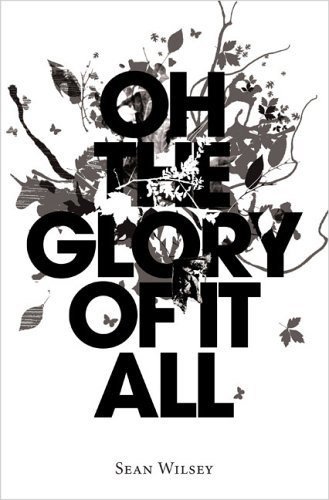
I was scanning book covers while walking briskly through Borders when this stopped me dead. Really like the design. Needless to say, I'm tempted to buy the book.

Saturday, April 22, 2006

The legendary (well, to Apple fans anyway) "1984" ad. Steve Jobs' speech leading up to the ad is worth listening to as well. Watch how he builds up the Apple myth:

Friday, April 14, 2006

It always rains on Good Friday.